 Available
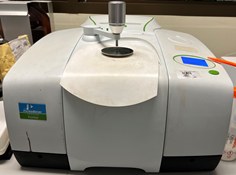
Fourier Transform Infrared Spectroscopy (FTIR)
PerkinElmer
Identifies chemical compounds based on their molecular vibrations. When infrared light interacts with the sample, specific frequencies are absorbed, and the absorbed light at each frequency is measured and plotted as a spectrum. Spectral range 400–4000 cm⁻¹, resolution from 0.5 to 4 cm⁻¹, scan speed of 1 to 1000 scans per second. Solid, liquid and powder samples can be analysed non-destructively with the ATR (Attenuated Total Reflection) technique.
 Available
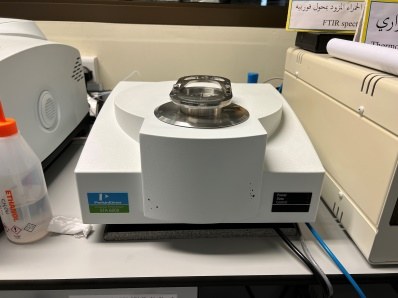
Thermogravimetric Analysis (TGA / DSC)
PerkinElmer STA 6000
A multipurpose thermal analysis system combining Thermogravimetric Analysis (TGA) and Differential Scanning Calorimetry (DSC). TGA measures the weight of a sample as it is heated, cooled or held at constant temperature; DSC measures the energy absorbed or released. Oven range from room temperature to 995 °C, heating rate from 0.1 to 100 °C/min under nitrogen.
 Available
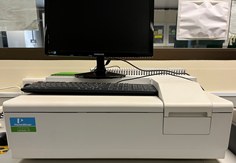
Fluorescence / Photoluminescence Spectrophotometry (PL)
PerkinElmer LS 55
Measures the light emitted by a sample after it has absorbed light. A pulsed xenon lamp (450 W) is used for excitation. Samples are illuminated from 200 to 800 nm and emission spectra are recorded from 200 to 900 nm. Path length adjustable from 0.1 to 1.0 cm depending on the sample holder.
 Available
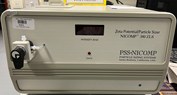
Zeta Potential Analyzer
NICOMP 380 ZLS
Measures the surface charge of particles in liquid suspensions and emulsions; zeta potential is an indicator of dispersion stability. Electric field from 1 to 250 V/cm, equipped with a 12 mW red laser diode (635 nm).
 Under maintenance
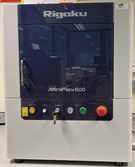
X-ray Diffraction (XRD)
Rigaku MiniFlex 600
A benchtop X-ray diffractometer that measures the crystallinity of materials. X-rays scattered by the crystal lattice produce a diffraction pattern. Copper-target X-ray tube operating at 600 W (40 kV, 15 mA).
 Available
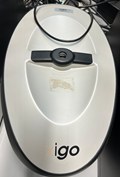
Surface Area Analyzer
Xigo Nanotools Acorn
Measures the wetted surface area of nanoparticles dispersed in liquids using low-field (13 MHz) Nuclear Magnetic Resonance (NMR).
 Available
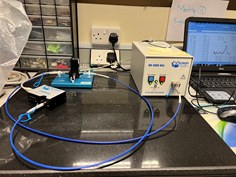
Ultraviolet–Visible Spectrometer (UV-Vis)
Ocean Optics USB 4000
A compact USB-based spectrometer that measures how materials absorb or transmit light, with a wavelength range of 200 to 850 nm. Deuterium and halogen light sources cover the ultraviolet and visible ranges.
 Available
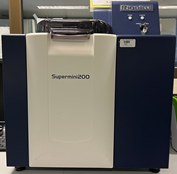
X-ray Fluorescence (XRF)
Rigaku Supermini 200
A benchtop XRF spectrometer for elemental analysis. Each element emits fluorescent X-rays at a specific wavelength. Detects elements from sodium (Z = 11) to uranium (Z = 92) with detection limits in the ppm range.
 Available
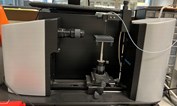
Optical Tensiometer
Biolin Theta Basic
Precise measurement of contact angle, surface and interfacial tension, and wettability. Supports sessile drop (static contact angle), pendant drop (surface/interfacial tension), tilted drop and needle-in drop (dynamic contact angle) methods.
 Under repair
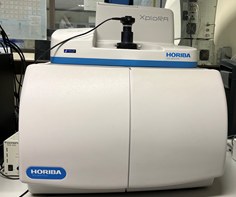
Raman Spectrometer
HORIBA Scientific
Analyses the chemical structure, phase and properties of materials from the light they scatter. SWIFT™ confocal microscopy provides high-resolution imaging. Lasers at 532 nm and 785 nm; high-sensitivity CCD camera with a spectral range of 100–3400 cm⁻¹ and resolution below 1 cm⁻¹.
 Currently unavailable
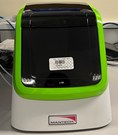
Chemical Oxygen Demand (COD) Analyzer
Mantech L100
A portable benchtop analyzer for rapid and accurate COD measurement of water samples.
 Available
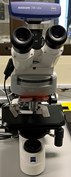
Fluorescence Microscope
Zeiss Axio Lab A1
An easy-to-use, high-quality microscope for routine laboratory work, providing clear images for analysis and documentation.
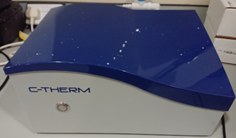 Available
Thermal Conductivity Measurement System
C-Therm TCI
Measures the thermal conductivity of solids, liquids, powders and pastes by applying a heat pulse through a sensor and analysing the response. Range 0.01 to 500 W/m·K, from room temperature up to 500 °C depending on the sensor.
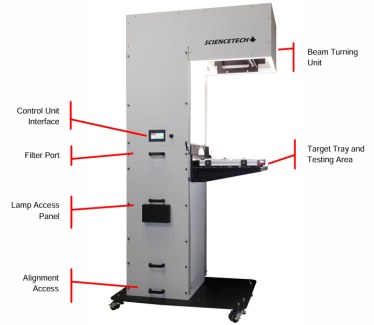 Available
Solar Simulator
Sciencetech UHE-NL
Produces uniform light closely matching the solar spectrum (AM1.5G) at an intensity of at least 1 Sun. Uses 500–1600 W xenon arc lamps with AM0, AM1.0 and AM1.5 filters. Illumination area 150 × 150 mm at a typical working distance of 170 mm.