← Nanotechnology Research Center
Prototypes & Innovations
Working prototypes developed at the Nanotechnology Research Center, taking nanomaterials research from the laboratory toward real-world use.
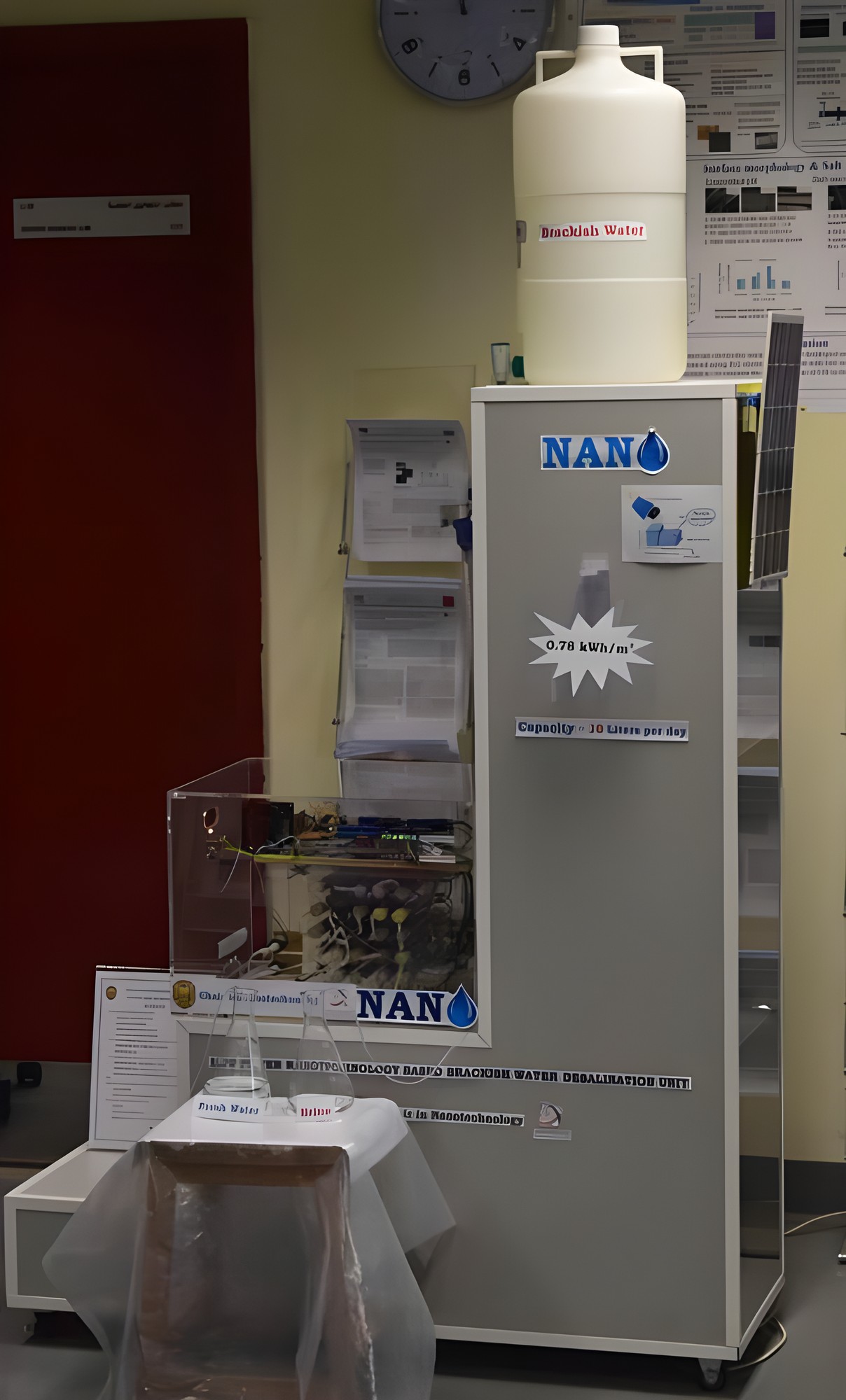 Generation 1 unit on display at NRC
WaterDesalinationNanoporous carbonSolar-ready
PROTOTYPE 01
Mini-scale Water Desalination by Capacitive Deionization (CDI)
● Generation 1: completed● Generation 2: under development
A simple, cost-effective and energy-efficient system for desalinating brackish water. Many compact CDI cells, built from flexible nanoporous activated carbon cloth electrodes, are connected in series and parallel. Salt ions are captured on the electrodes when a small voltage is applied, producing fresh water. The unit is flexible, mobile and can run on renewable energy.
2,500 → 250 ppmsalt reduced 10×
10 L / dayfresh water capacity
1.6 V DCapplied potential
0.78 kWh/m³energy use
5 µmgravity pre-filter
Solar-readymobile and flexible
Development stages
Generation 1Completed
✓Brackish water of 2,500 ppm from a well in the Al-Lawami region was desalinated to 250 ppm.
✓Capacity of up to 10 L of fresh water per day at an applied potential of 1.6 V DC.
✓Gravity-assisted 5 µm pre-filtration before the water enters the CDI cells.
✓Microcontroller (Arduino UNO R3) controls the desalination and regeneration cycles.
Generation 2Under development
✓Solar power system: two 100 W solar panels, a solar battery charger and a battery set.
✓Water quality sensors and pumps at the inlet and outlet.
✓A microcontroller connected to the CDI units, the sensors and the pumps.
✓A main PC as part of the system design.
Generation 1 in the laboratory
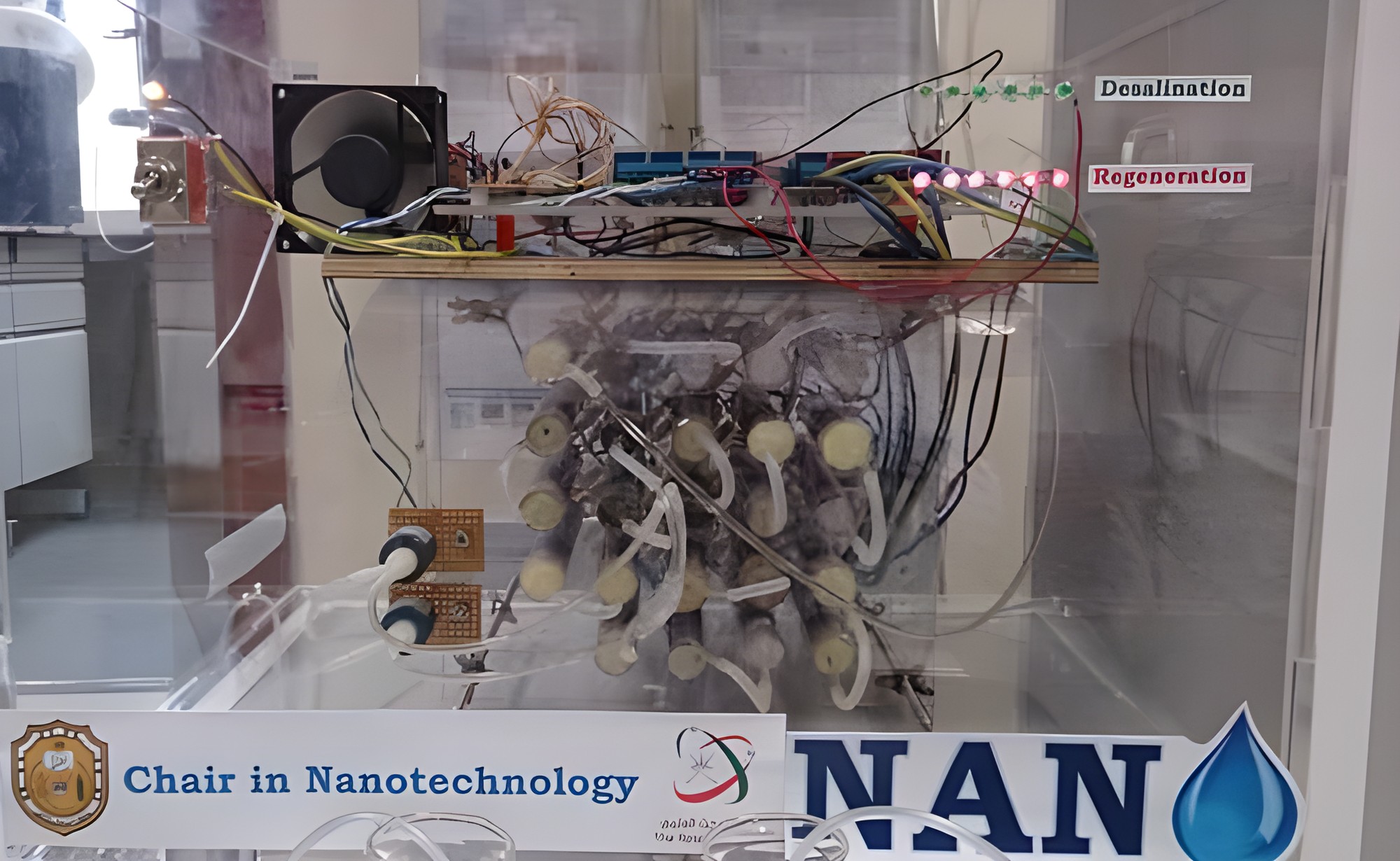 The CDI unit: cylindrical cells, tubing and control electronics
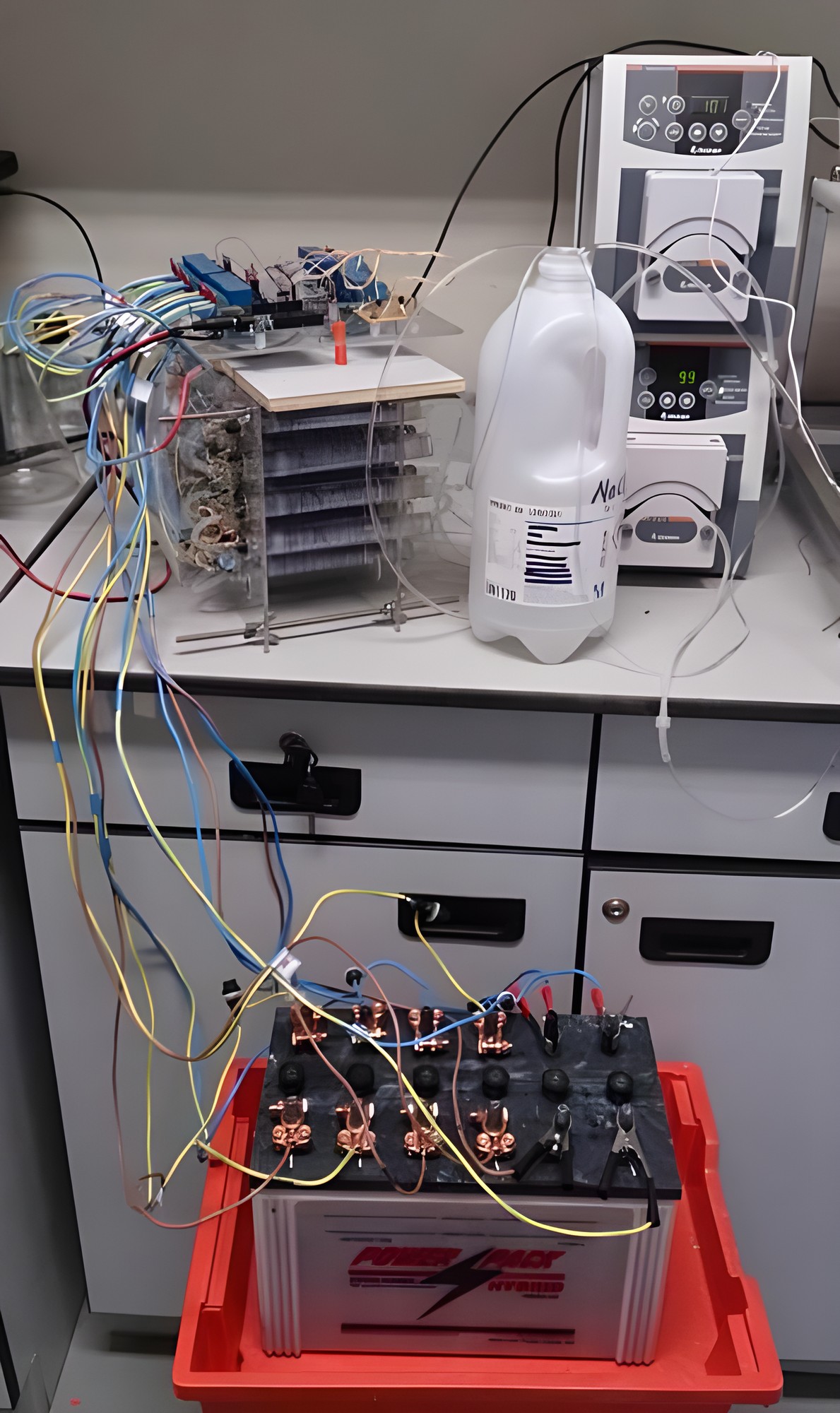 Laboratory testing with peristaltic pumps and battery power
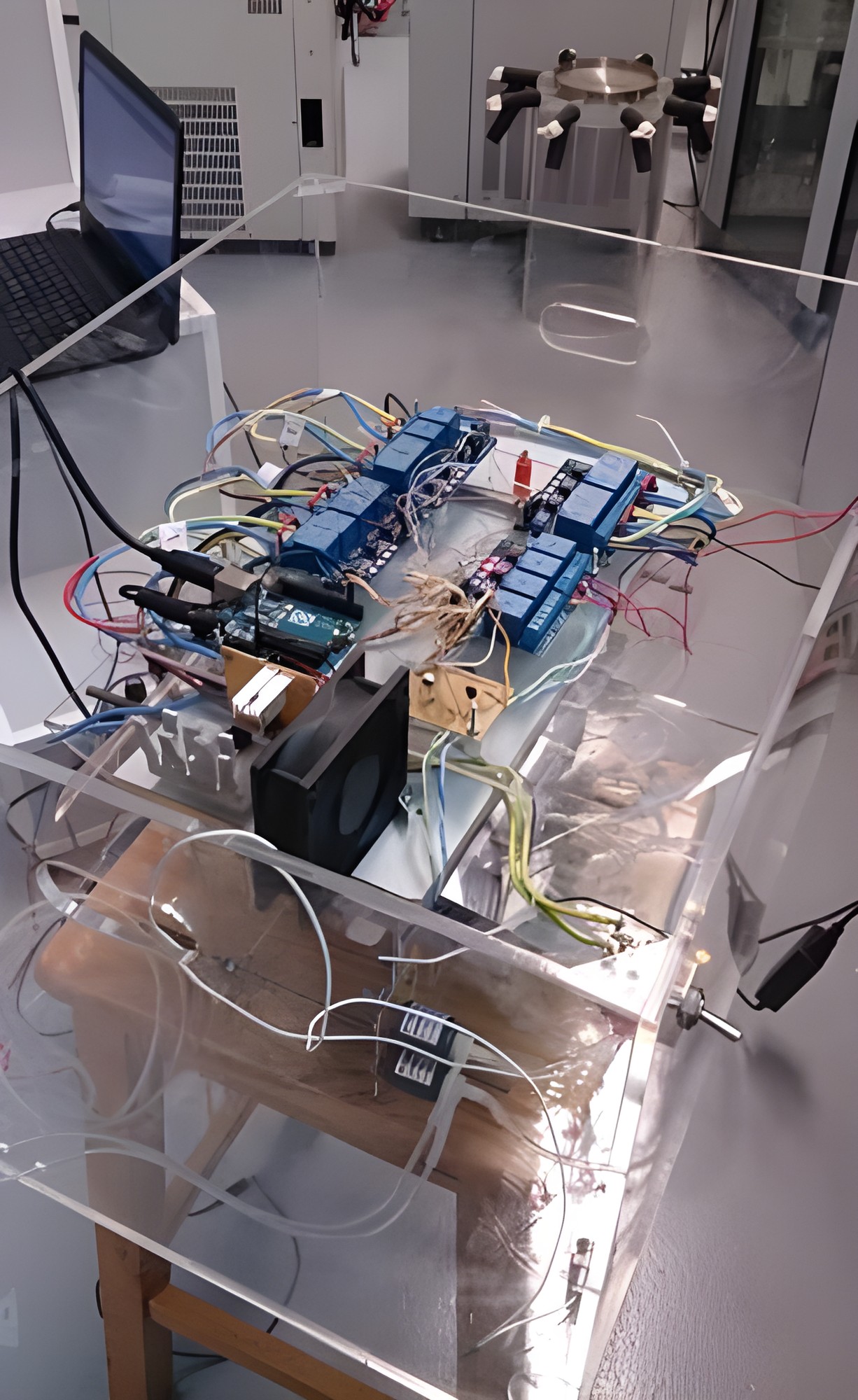 Arduino-based control board and relay modules
How a CDI cell works
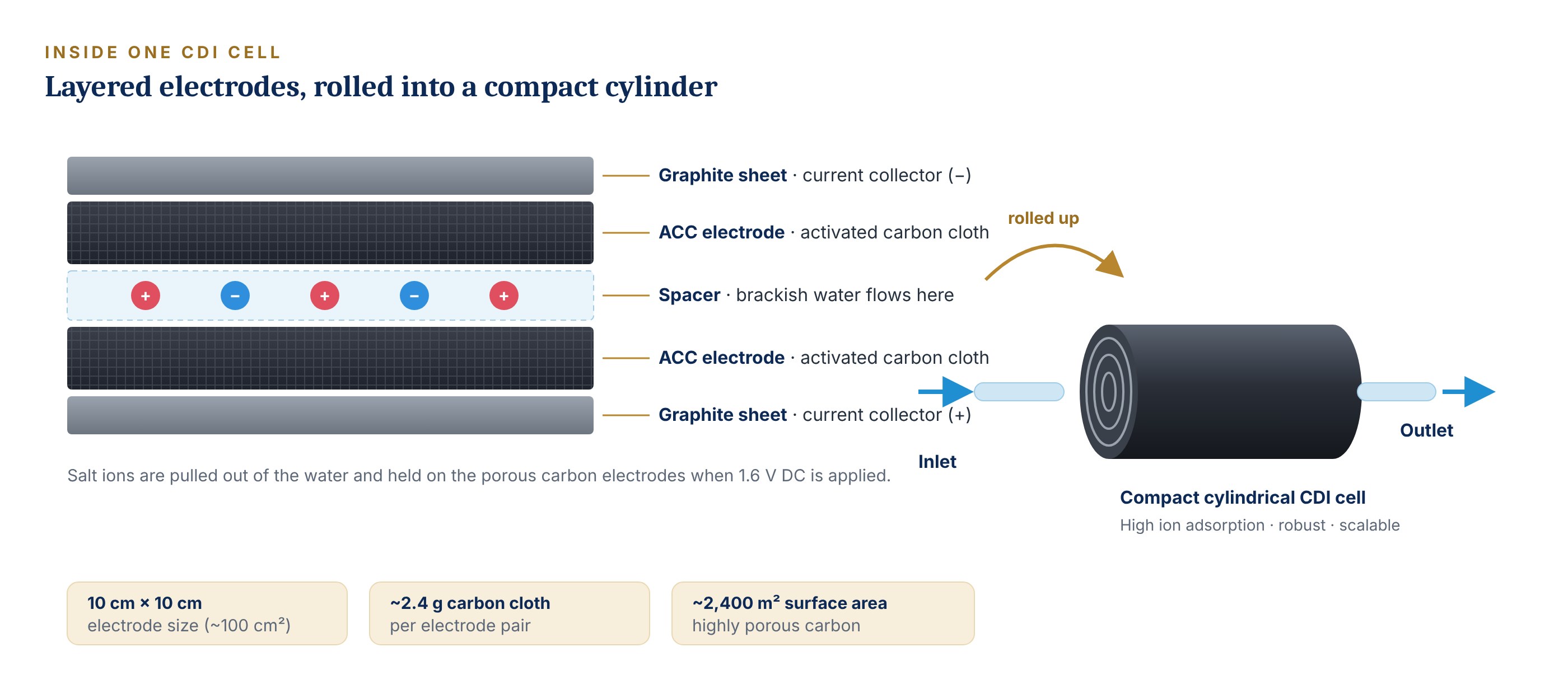
Each cell has two flexible activated carbon cloth electrodes (10 cm × 10 cm, about 2.4 g, with a total surface area of about 2,400 m²) attached to graphite sheet current collectors and rolled into a compact cylinder. The cylindrical design gives high ion adsorption and mechanical robustness, and cells can be scaled up or down for irrigation, household use, safe drinking water or industrial applications.
GENERATION 2 · COMING SOON
Something new is charging up…
The second-generation CDI prototype is under development. We can’t reveal everything yet, but here is a glimpse of what is coming.
CHARGING…
☀Powered by the sunTwo 100 W solar panels, a solar battery charger and a battery set.
◉It checks the waterWater quality sensors and pumps at the inlet and the outlet.
⚙A smart coreA microcontroller connected to the CDI units, sensors and pumps.
⇄With a main PCA main PC is part of the system design.
The full reveal is on the way. Stay tuned.
A sneak peek at the Generation 2 design
Interested in this technology?The NRC welcomes partners for testing, scale-up and applications in water treatment.
Collaborate with us →